

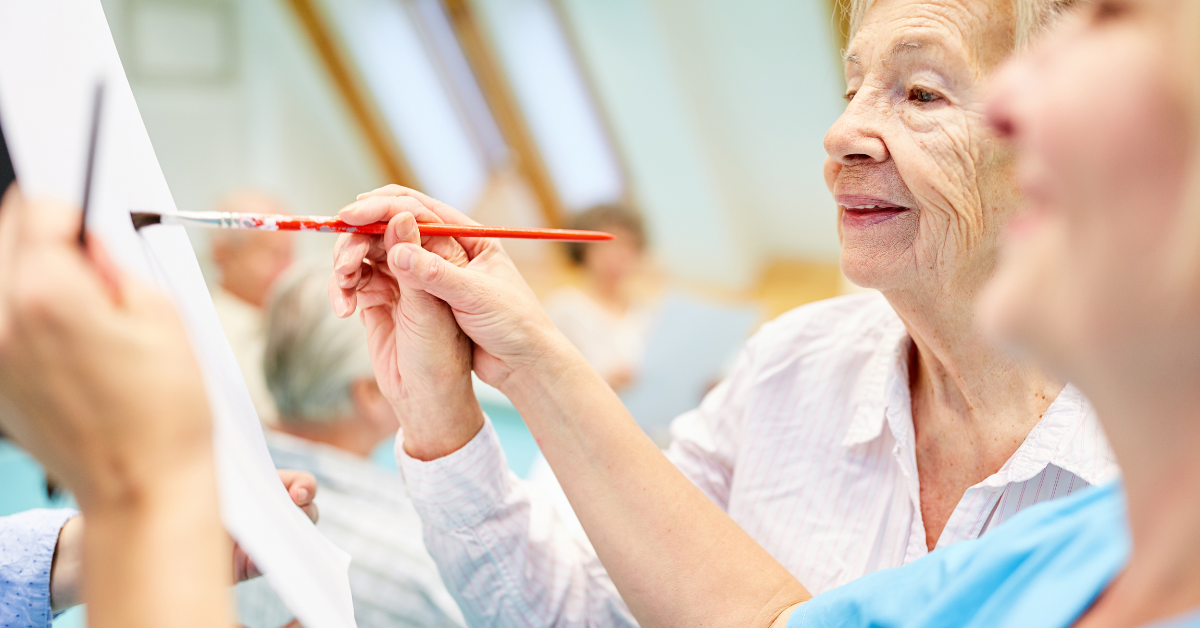
For families watching a loved one navigate dementia, finding meaningful ways to connect becomes deeply personal. Art therapy offers something precious—a bridge between the person you remember and the person they are today. This creative approach to healing has helped individuals in our memory care community in Port Washington.
Art-based programs create moments that matter. These creative experiences give people living with memory loss a renewed sense of purpose and accomplishment. More importantly, they offer families something invaluable: watching their loved one smile, engage and express themselves in ways that words might no longer allow. These carefully crafted activities don’t just provide emotional comfort—they actually help maintain cognitive abilities that might otherwise fade more quickly.
Why Art Matters So Much in Memory Care
Creative expression isn’t just a nice-to-have activity—it’s as essential to our humanity as food and shelter. When someone you love lives with memory loss, art becomes something almost miraculous: a way to reach their mind, heart and spirit when traditional approaches fall short.
When emotions need a voice
Art does something beautiful for emotional well-being in memory care communities throughout Port Washington. The creative process naturally calms the nervous system, working like a gentle, built-in stress reliever. More than that, these activities help reduce depression and anxiety while creating genuine connections between people.
Stories that pictures tell
People living with dementia may struggle to remember what happened yesterday, but they often recall childhood memories with startling clarity. Visual storytelling bridges this gap beautifully. When someone creates art, they’re using color, texture and form as their language. These artistic stories become doorways for meaningful conversations between residents and their families or caregivers. Something powerful happens when people with dementia express themselves through art—they participate as equals, feel successful and rediscover their sense of worth. Even when speech becomes challenging, their eyes still light up with pride as they watch their creations come to life.
Art Activities That Create Real Wellness Benefits
Collage making for self-expression
Collage work opens doors to communication when words become difficult. Residents choose and arrange pre-cut images, creating visual stories that express what they might struggle to say aloud. This process becomes a bridge between residents and family members, often sparking conversations about memories and feelings that seemed lost. The simple act of sorting and arranging naturally encourages decision-making while creating opportunities for sharing personal stories.
Painting to music for relaxation
Gentle melodies paired with painting create something special—a multisensory experience that naturally calms anxiety and brings inner peace. Seniors often respond to rhythms through their choice of colors and brush movements, releasing emotions in healthy ways. Many memory care communities find this combination particularly effective for emotional well-being, providing reliable stress relief that residents look forward to.
Clay sculpting to improve motor skills
Clay offers unique therapeutic value through its tactile nature. Working with this material helps maintain hand strength and dexterity while providing soothing sensory input. Regular clay work—twice weekly for 80-minute sessions—produces measurable improvements in hand function, mood and self-expression. The immediate sensory feedback from clay stimulates both physical and cognitive responses.
Mandala coloring for focus and calm
These structured, symmetrical patterns provide a meditative experience that helps quiet mental restlessness and emotional distress. Coloring mandalas has been shown to improve attention span, working memory and problem-solving abilities. The beauty of this activity lies in its accessibility—seniors at any skill level can participate successfully and experience genuine accomplishment.
Nature-inspired art for sensory connection
Working with natural elements—flower arranging, leaf printing, nature mandalas—brings the outdoors inside in meaningful ways. These projects engage multiple senses while often triggering positive memories of gardens, walks or outdoor experiences. The textures and scents of natural materials provide rich sensory input without requiring complex hand movements.
Finding Hope Through Creative Connection
When you’re considering memory care options for someone you love, look for programs that honor their creative spirit. Art activities complement medical care beautifully, addressing the emotional and social needs that medication alone cannot reach. If you’d like to learn more, we invite you to call us at (262) 268-1300 to schedule a tour of Lincoln Village Senior Living.
The most beautiful truth about creativity is that it doesn’t disappear with memory loss. Even as other abilities change, the human need to create, express and connect remains intact. This gives families something to hold onto—proof that the person they love is still there, still capable of joy, still deserving of experiences that make them feel fully alive.
FAQs
Q1. How does art therapy benefit individuals with dementia?
Art therapy helps manage complex emotions associated with memory loss, such as anxiety and frustration. It provides a non-verbal means of expression, improves cognitive function and enhances overall well-being. Engaging in creative activities can also reduce depression and promote social interaction.
Q2. What types of art activities are most effective in memory care settings?
Effective art activities include collage making for self-expression, painting to music for relaxation, clay sculpting to improve motor skills, mandala coloring for focus and calm, nature-inspired art for sensory connection and group murals to build community. These activities are tailored to address the cognitive, emotional and social needs of residents.